

100% most common Feng Shui question I get:
”Where should my bed go? Can my bed face the door?”
As our sanctuary for rest and rejuvenation, the placement of your bed is the one of the most foundational steps in creating a space that supports deep sleep, energy, and harmonious relationships.
Arranging a bedroom can feel like a game of Tetris, especially in tighter spaces. But beyond just fitting the furniture, we’re aiming to arrange the energy, or Qi, to flow gently and support you.
Let’s break down the core Feng Shui principles for bed placement, so you can see if your current setup might be blocking your energy and discover the ideal position for more restful sleep.
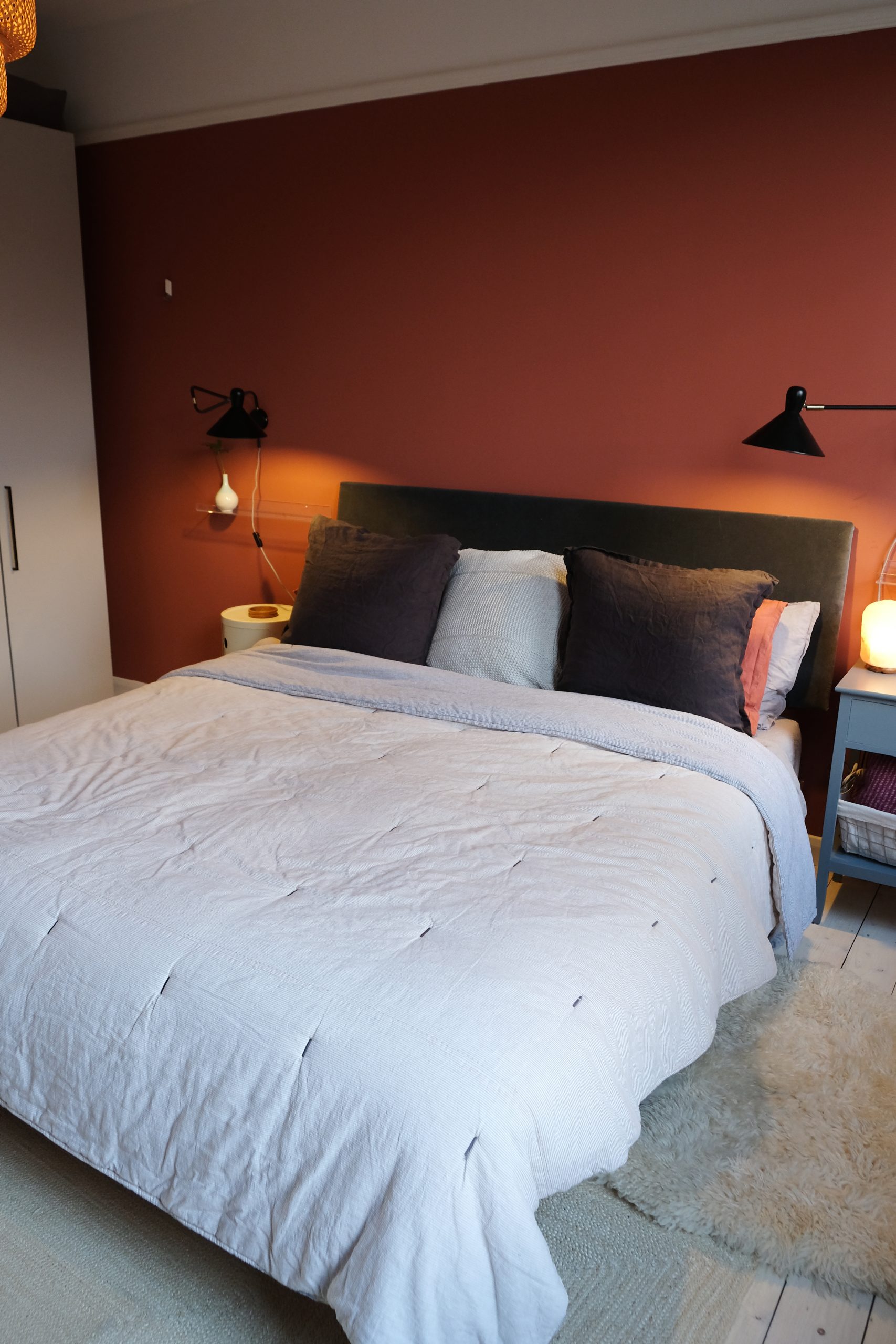
Where possible, always place you bed behind a solid wall.
Bed Checklist
Wherever possible, aim for these ideal conditions to create a supportive and balanced bedroom:
- A solid wall behind the bed: This provides stability and a sense of support (like a symbolic mountain at your back), helping you feel grounded.
- The door in sight, but not directly aligned: The ideal is to see the door from your bed without being directly in its path. This “commanding position” creates a natural feeling of ease and safety, as you can see who enters without being in the direct flow of energy.
- Windows to the side: It’s best to avoid having a window directly behind the bed head. Windows on the side allow for good circulation of light, air, and Qi.
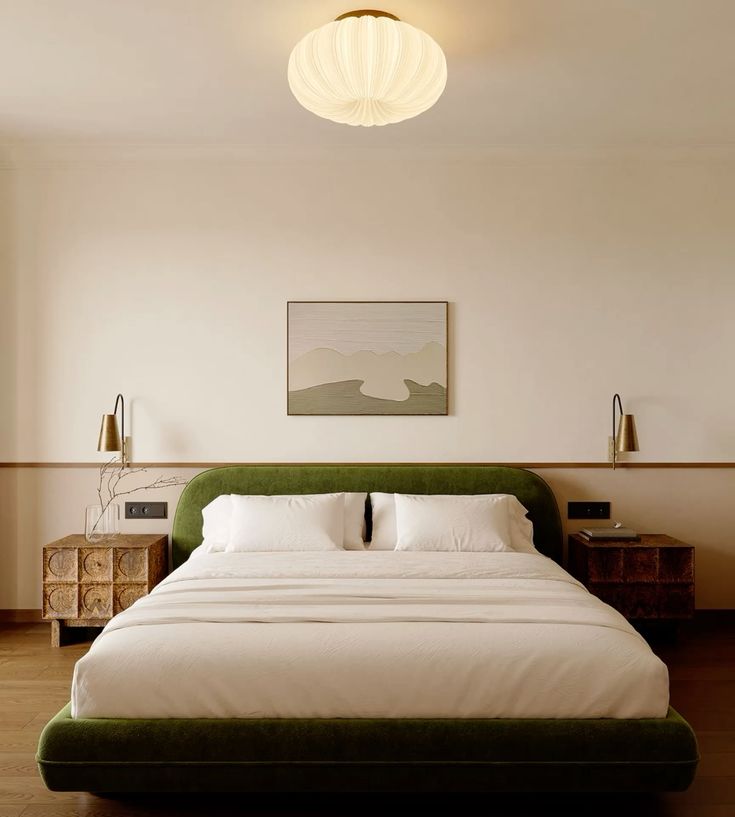
- Equal space on both sides: Promotes balanced energy flow around the bed, supports rejuvenation, and fosters equality in relationships. If you’re single, this openness symbolically welcomes a future partner.
Top Dilemmas
Let’s dive into some specific, common scenarios.
Q: Is it okay to have my bed facing a window? What about the door?
This is a nuanced one. Some traditional rules say facing a window is less than ideal because energy can move too quickly through openings. However, facing a window is far preferable to facing the door directly.
- The Window: As long as the window is in good repair (no broken panes or leaks) and you can use thick curtains or blinds to soften the energy when needed, it can be perfectly fine. The key, as always, is that it feels restful to you.
- Avoid having the window directly behind your headboard. This can create an unconscious sense of vulnerability, potentially leading to restlessness and disturbed sleep, as there’s a symbolic “threat of the unexpected” from behind.
Q: What’s the big deal with the bed facing the door?
Avoid having the foot of your bed directly in line with the door. This alignment is often called the “coffin” or “corpse position” in Feng Shui, as it allows energy to rush in and out of the room too directly and forcefully. It can feel energetically “unsafe” and overstimulating.
The goal is to be in the “commanding position”: place your bed diagonally from the door, so you can see it easily without being in its direct line of fire. This simple shift creates a profound feeling of security and control.

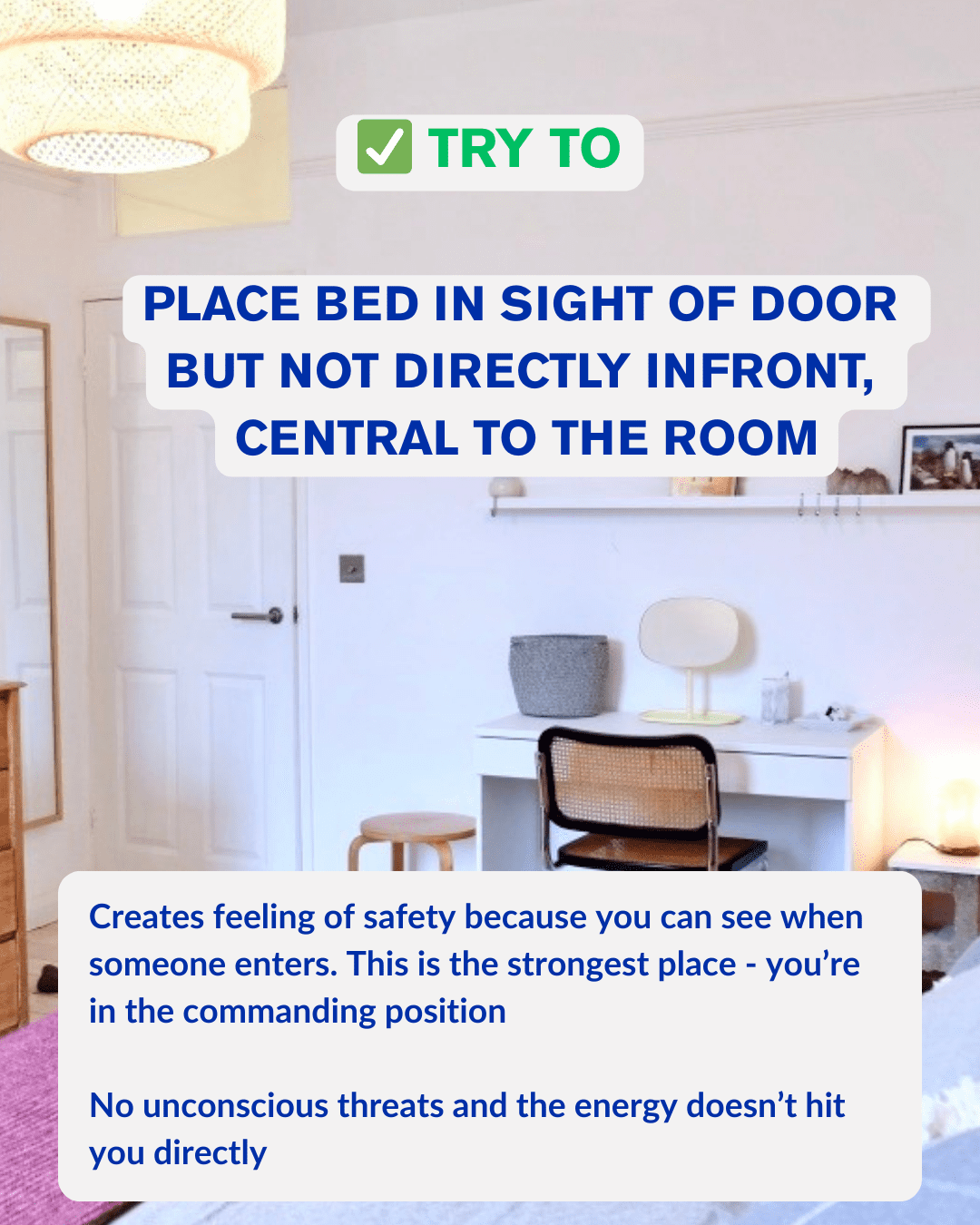
Remember, If your room layout can’t accommodate every single ideal principle, don’t worry. Feng Shui is not about rigid rules. What feels good to you is paramount.
Use curtains, a solid headboard, balanced nightstands, or strategic room dividers to soften challenging layouts and create your own supportive haven that works for you.


0 Comments